
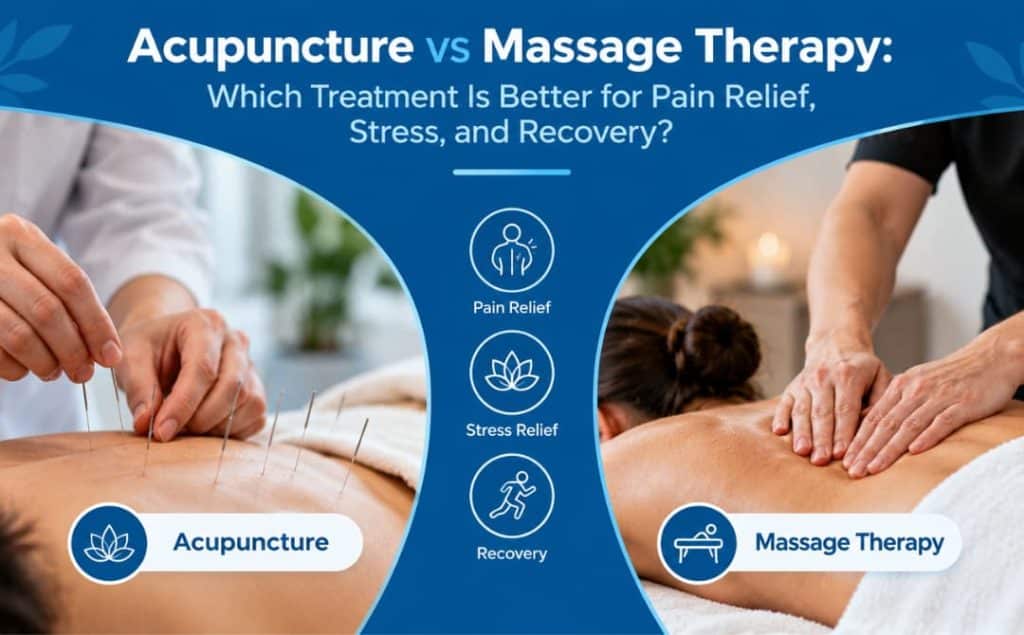
When your back hurts, your shoulders feel tight, or your body is slow to recover after exercise, you may wonder whether acupuncture or massage therapy is the better choice.
The answer depends on what you need. Acupuncture may be useful for some types of ongoing pain, while massage therapy can be helpful for muscle tension, short-term pain relief, relaxation, and recovery. Some people also use both as part of a broader holistic wellness routine rather than choosing only one treatment.
Let us look at how the two treatments work and when each one may make more sense.
Book Your Massage Therapy Appointment TodayWhat Is Acupuncture?
Acupuncture is a treatment in which very thin needles are placed at specific points on the body.
It has roots in traditional Chinese medicine, although modern research also studies how acupuncture may affect nerves, tissues, and the way the brain processes pain.
Research reviewed by the National Center for Complementary and Integrative Health suggests acupuncture may help with certain conditions, including chronic lower-back pain, neck pain, knee osteoarthritis, and some headaches.
National Center for Complementary and Integrative Health
People looking for Mississauga acupuncture often seek treatment for ongoing pain, stiffness, headaches, or general wellness support.
In Ontario, the titles “Acupuncturist” and “Traditional Chinese Medicine Practitioner” are protected. Registered practitioners must meet standards set by the College of Traditional Chinese Medicine Practitioners and Acupuncturists of Ontario.
What Is Massage Therapy?
Massage therapy uses hands-on techniques to work with muscles, connective tissues, tendons, and other soft tissues.
Depending on your needs, treatment may involve gentle strokes, deeper pressure, stretching, or focused work on areas that feel tight or uncomfortable.
Research suggests massage therapy may provide short-term relief for some conditions, including lower-back and neck pain. However, the evidence is not equally strong for every type of pain.
People choosing massage therapy in Mississauga may be looking for help with sore muscles, stiffness, work-related tension, exercise recovery, or simple relaxation.
Registered Massage Therapists in Ontario are regulated by the College of Massage Therapists of Ontario. Only people registered with the College can use the protected titles Registered Massage Therapist or Massage Therapist.
Acupuncture vs Massage Therapy: What Is the Main Difference?
The biggest difference is how the treatments are performed.
Acupuncture uses thin needles placed at selected points. Massage therapy uses hands-on pressure and movement to work directly with soft tissues.
Here is a simple comparison:
| Area | Acupuncture | Massage Therapy |
|---|---|---|
| Method | Very thin needles | Hands-on massage techniques |
| Common reason for treatment | Certain chronic pain conditions | Muscle tension, soreness, relaxation |
| Direct muscle work | No traditional massage | Yes |
| Relaxation | Some people find it relaxing | Common reason people choose massage |
| Exercise recovery | May support some pain concerns | Often used for tight or tired muscles |
| Treatment style | Point-based treatment | Pressure and movement-based treatment |
| Needles involved | Yes | No |
Neither treatment is automatically better. The right choice depends on your symptoms, comfort level, and goals.
Which Is Better for Pain Relief?
If pain is your main concern, the cause and type of pain matter more than the treatment name.
Acupuncture has been studied for several chronic pain conditions. NCCIH reports evidence suggesting it can help with lower-back pain, neck pain, osteoarthritis-related pain, and some headache conditions.
Massage may also work as a pain relief therapy, particularly when discomfort is linked to tight or sore muscles. Evidence suggests it may offer short-term help for lower-back and chronic neck pain, although research quality varies.
For example, imagine you spend eight hours a day working at a computer and regularly finish the day with tight shoulders. Massage may make sense because the therapist can work directly on those tense muscles.
Someone dealing with ongoing knee osteoarthritis pain may instead discuss acupuncture with a qualified practitioner because acupuncture has specific research supporting its use for this condition.
Pain should still be medically assessed when it is severe, unexplained, getting worse, or follows a serious injury.
Which Treatment Is Better for Stress and Relaxation?
Massage therapy may feel like the more natural choice when relaxation is your main goal.
Gentle massage techniques can give you quiet time while helping tense muscles feel less tight. Swedish massage, aromatherapy massage, and other softer techniques are commonly chosen by people who want a calming experience.
Acupuncture can also feel relaxing for some people, especially during a quiet treatment session. However, it should not be presented as a proven treatment for everyday stress simply because someone feels calmer afterward.
If stress is showing up physically as stiff shoulders, a tight back, or tired muscles, massage may be particularly appealing.
This is why searches such as best massage therapy Mississauga often come from people who are not only dealing with pain. They may simply want to feel physically and mentally less tense.
Which Is Better for Exercise and Muscle Recovery?
Massage therapy may be useful when recovery problems mainly involve tight, tired, or sore muscles.
Sports massage, deep tissue massage, stretching-based treatments, and more focused massage techniques can be used according to the person’s activity and comfort level.
Someone who exercises regularly may choose massage after periods of heavier training because it allows direct work on muscles that feel tight.
Acupuncture may be considered when pain is more persistent or when a qualified healthcare professional believes it could be appropriate for the specific condition.
Neither treatment should be used to push through a serious sports injury without getting the injury properly assessed.
Can You Combine Acupuncture and Massage Therapy?
Yes, they do not always need to compete with each other.
Some people use massage to address muscle tension and relaxation while using acupuncture for a specific pain concern. This can form part of a wider holistic wellness approach.
Some treatment centres also offer combinations such as acupuncture with cupping, Gua Sha, or Tuina massage. Massage options may include Swedish massage, deep tissue massage, sports massage, aromatherapy massage, hot stone massage, and stretching-based services.
The important point is that more treatments do not automatically mean better results. Each service should have a clear reason and should suit your individual needs.
How Do You Know Which Treatment to Choose?
Start by asking yourself what is bothering you most.
Choose massage therapy when your main concerns include:
- Tight or tired muscles.
- General body tension.
- Muscle soreness after activity.
- A desire for hands-on relaxation.
- Short-term relief from certain muscle and joint discomforts.
You may consider acupuncture Mississauga services when you are dealing with a condition for which acupuncture has supporting evidence, such as certain types of chronic back, neck, knee, or headache pain.
Your comfort matters too. Someone who strongly dislikes needles may prefer massage. Another person may be comfortable with acupuncture and want to explore it for a particular pain problem.
How Should You Choose a Practitioner in Mississauga?
Qualifications should come before marketing claims.
For massage therapy, check whether the person is registered with the College of Massage Therapists of Ontario. The College provides a public register that allows people to confirm whether an RMT is authorised to practise.
For acupuncture, Ontario also has a public register for Registered Acupuncturists and Traditional Chinese Medicine Practitioners.
So, whether you are searching for Mississauga acupuncture or the best massage therapy Mississauga has to offer, do not judge a practitioner only by advertisements or star ratings. Check registration, experience, communication, treatment approach, and whether they take time to understand your concerns.
Conclusion
There is no universal winner in the acupuncture vs massage therapy comparison. Acupuncture has evidence supporting its use for several chronic pain conditions, while massage therapy can be a useful option for muscle tension, relaxation, soreness, and certain types of short-term pain relief.
The best pain relief therapy is the one that fits your actual condition rather than simply following a trend. For people exploring acupuncture Mississauga or massage therapy in Mississauga, Kaizen Health Group offers Registered Massage Therapy, acupuncture, Swedish and deep tissue massage, aromatherapy, sports massage, stretching services, and acupuncture options combined with treatments such as cupping, Gua Sha, and Tuina.
Frequently Asked Questions
1. Is acupuncture or massage therapy better for pain relief?
It depends on the type of pain. Acupuncture may be helpful for some chronic pain conditions, while massage therapy may be better for muscle tension, soreness, and short-term discomfort.
2. Can acupuncture and massage therapy be used together?
Yes, some people use both treatments as part of a wider wellness plan. Massage may help with tight muscles and relaxation, while acupuncture may be used for certain ongoing pain concerns.
3. Is massage therapy good for stress and relaxation?
Yes, massage therapy is commonly chosen for relaxation because gentle hands-on techniques may help reduce muscle tension and create a calmer experience. It can be a useful part of a regular holistic wellness routine.
4. How do I choose the best massage therapy in Mississauga?
When looking for the best massage therapy Mississauga offers, check the therapist’s registration, experience, treatment options, communication, and whether the session can be adjusted to your individual needs.
5. What should I expect during a Mississauga acupuncture appointment?
During a Mississauga acupuncture appointment, a qualified practitioner will usually discuss your symptoms and health history before placing very thin needles at selected points on the body. The treatment plan may vary based on your condition.