
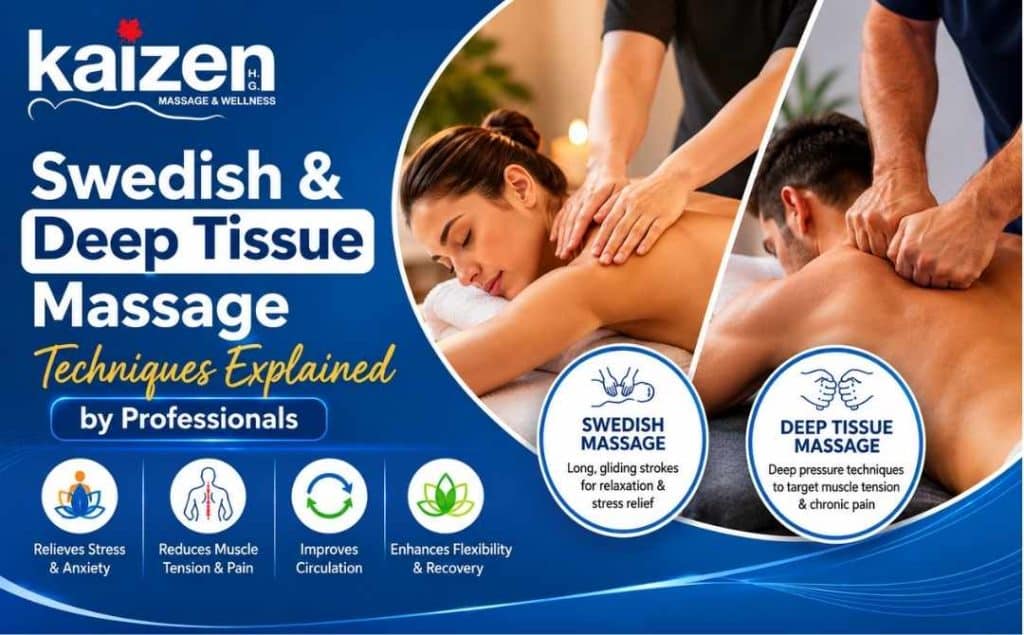
Massage therapy has become one of the most trusted wellness treatments for relaxation, muscle recovery, and stress management. Among the many massage styles available today, Swedish massage and deep tissue massage remain two of the most popular choices. While both treatments focus on improving physical comfort and relaxation, the techniques used in each therapy are very different.
Many people hear terms like Swedish Massage Techniques or deep tissue massage techniques but do not fully understand what actually happens during these sessions. Some expect gentle relaxation but receive stronger pressure, while others book deep tissue therapy without knowing how intense it can feel.
Understanding how these massage movements work can help people choose the right treatment for their body, comfort level, and recovery needs.
What Is Swedish Massage?
Swedish massage is one of the most common forms of massage therapy. It focuses mainly on relaxation, stress reduction, and improving circulation throughout the body.
This style of massage uses gentle to medium pressure and smooth flowing massage movements designed to calm the nervous system and reduce tension in the muscles.
Swedish massage is often recommended for:
- first-time massage clients
- stress relief
- mild body tension
- relaxation
- improving sleep quality
- general wellness support
The treatment usually includes massage oils or lotions to help the hands glide smoothly across the skin.
Read this also: The Five Basic Strokes of Swedish Massage
Main Swedish Massage Techniques
There are several classic swedish massage techniques used by professional therapists during treatment sessions.
5 Classic Swedish Massage Techniques
Gentle to medium pressure movements designed to relax muscles and improve circulation
Effleurage
Long gliding strokes to warm up muscles
Petrissage
Kneading and squeezing muscles gently
Friction
Circular pressure on tight areas
Tapotement
Rhythmic tapping to stimulate muscles
Vibration
Gentle shaking to reduce tension
Effleurage
Effleurage is one of the most recognizable massage movements in Swedish massage.
This technique uses long, smooth, gliding strokes across the muscles. Therapists often begin and end sessions with effleurage to warm up the muscles and create relaxation.
Effleurage helps:
- improve circulation
- relax muscles
- reduce stress
- calm the nervous system
The pressure is usually light to moderate.
Petrissage
Petrissage involves kneading, squeezing, and lifting the muscles gently.
This technique works deeper into soft tissues compared to effleurage and helps reduce muscle tightness.
Petrissage may improve:
- blood flow
- muscle flexibility
- tension relief
- relaxation
This technique is commonly used on the shoulders, back, and legs.
Friction
Friction techniques use circular pressure movements on targeted areas.
Therapists use this technique to focus on tighter muscles or small tension points. Friction creates warmth in the tissues and may help improve muscle mobility.
Tapotement
Tapotement includes rhythmic tapping or light striking movements using the hands.
This technique may help stimulate muscles and improve circulation.
Common tapotement movements include:
- cupping
- chopping
- tapping
It is usually performed briefly during Swedish massage sessions.
Vibration
Vibration involves gentle shaking or vibrating movements applied to muscles.
This technique is used to encourage relaxation and reduce tension.
What Is Deep Tissue Massage?
Deep tissue massage focuses more on chronic tension, tight muscles, and deeper muscle layers.
Unlike Swedish massage, deep tissue massage techniques use slower and firmer pressure to target muscle knots and restricted tissues.
This treatment is commonly used for:
- chronic muscle tension
- sports recovery
- posture problems
- lower back discomfort
- neck and shoulder tightness
- muscle stiffness
Main Deep Tissue Massage Techniques
Professional therapists use several specialized deep tissue massage techniques during treatment sessions.
5 Deep Tissue Massage Techniques
Slow, firm pressure targeting deeper muscle layers and chronic tension
Slow Deep Strokes
Firm strokes along muscle fibers to release chronic tightness
Trigger Point Therapy
Focused pressure on muscle knots to release tension
Cross-Fiber Friction
Pressure across muscle fibers to improve mobility
Forearm Pressure
Forearms or elbows for deeper pressure on large muscles
Muscle Stripping
Deep gliding along the full muscle length for back relief
Slow Deep Strokes
One of the most important deep tissue massage techniques involves slow, firm strokes applied along the muscle fibers.
This pressure helps release chronic muscle tightness and improve movement.
The strokes are slower than Swedish massage because the therapist works deeper into the tissues.
Trigger Point Therapy
Trigger point therapy targets tight muscle knots that may cause discomfort or tension in nearby areas.
The therapist applies focused pressure to these points for several seconds before slowly releasing the pressure.
This technique is commonly used in:
- neck muscles
- shoulders
- upper back
- lower back
Cross-Fiber Friction
Cross-fiber friction involves pressure movements across the muscle fibers instead of along them.
This technique may help improve mobility in tight or stiff muscles and is often used in injury recovery programs.
Forearm Pressure
Therapists sometimes use forearms or elbows during deep tissue massage techniques to apply stronger pressure safely.
This helps target larger muscle groups without placing too much strain on the hands.
Muscle Stripping
Muscle stripping involves deep gliding pressure along the full length of the muscle.
This technique is commonly used in deep tissue back massage techniques because it helps release tightness across larger back muscles.
Deep Tissue Back Massage Techniques Explained
The back is one of the most common areas treated during deep tissue therapy.
Deep tissue back massage techniques focus on releasing tension stored in the:
- upper back
- shoulders
- lower back
- spine-supporting muscles
Therapists often combine:
- slow pressure
- trigger point work
- forearm techniques
- muscle stripping
- stretching movements
People who sit for long hours, work physically demanding jobs, or experience stress-related tension often benefit from these treatments.
Swedish Massage vs Deep Tissue Massage
Although both therapies involve massage movements, their goals are different.
| Swedish Massage | Deep Tissue Massage |
|---|---|
| Gentle to medium pressure | Medium to strong pressure |
| Focuses on relaxation | Focuses on muscle recovery |
| Uses flowing strokes | Uses slow deep pressure |
| Ideal for stress relief | Ideal for chronic tension |
| Beginner-friendly | More intense treatment |
Swedish massage is generally more calming, while deep tissue massage focuses more on targeted muscle work.
Detailed Blog: What is a Swedish Massage vs Deep Tissue Massage?
Which Massage Style Is Better?
There is no single "best" massage type because every body has different needs.
Swedish Massage May Be Better For:
- relaxation
- stress management
- light tension
- improving sleep
- first-time clients
Deep Tissue Massage May Be Better For:
- chronic tightness
- sports recovery
- posture correction
- muscle pain
- physical strain
Some people even combine both therapies depending on their wellness goals.
Why Professional Technique Matters
Massage therapy should always be personalized based on comfort, health conditions, and body sensitivity.
Professional therapists understand:
- proper pressure levels
- safe muscle treatment
- body alignment
- tension patterns
- recovery needs
Read this also: Do's and Don'ts Before and After Your Massage Session
Final Thoughts
Understanding swedish massage techniques and deep tissue massage techniques helps people make better decisions when booking massage therapy treatments.
Swedish massage focuses on calmness, circulation, and relaxation through gentle massage movements, while deep tissue massage focuses on chronic muscle tension and recovery through stronger pressure and targeted work.
Whether someone chooses swedish massage, deep tissue back massage techniques, or a combination of both, the right treatment depends on personal comfort and physical needs. Professional wellness clinics like Kaizen Health Group provide personalized massage therapy services designed to support relaxation, muscle recovery, stress relief, and long-term physical wellbeing through experienced and professional care.
Professional Massage Therapy in Mississauga & Oakville
If you are looking for professional Swedish massage or deep tissue massage in Mississauga or Oakville, contact Kaizen Health Group today to book a personalized massage therapy session tailored to your wellness goals.
Frequently Asked Questions
Swedish massage techniques include long strokes, kneading, tapping, friction, and gentle movements designed to relax muscles and improve circulation.
Deep tissue massage techniques use slow, firm pressure to target deeper muscle layers, chronic tension, tight knots, and stiffness effectively.
Yes, deep tissue massage uses much firmer pressure compared to Swedish massage because it focuses on deeper muscle recovery and tension.
Deep tissue back massage techniques help reduce back stiffness, muscle tightness, posture-related tension, and discomfort caused by physical stress daily.
Swedish massage is usually better for relaxation because it uses gentle massage movements that calm the body and reduce stress naturally.
