
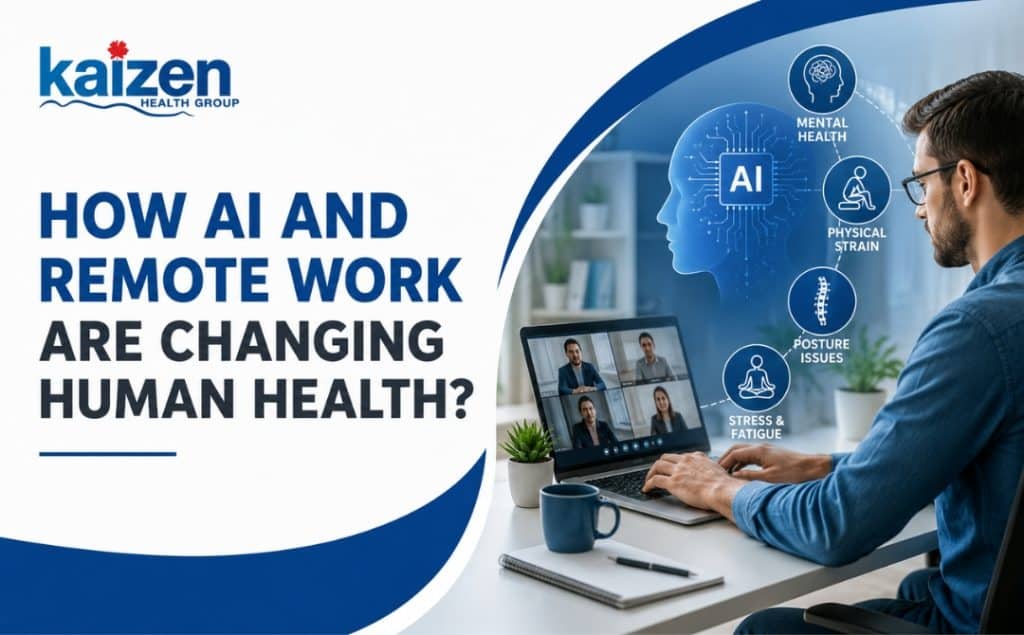
AI and remote work have changed the way people live and work. Today, many people can finish office tasks from home, join meetings online, use smart tools, and complete work faster than before. This sounds easy and helpful, and in many ways, it is. But it has also changed human health in quiet ways.
Earlier, people had to travel to work, walk inside offices, meet people face to face, and move around during the day. Now, many workers spend long hours sitting in one place. They look at screens for most of the day. They use laptops, phones, and AI tools to manage work, write content, attend meetings, plan tasks, and solve problems.
This new work style has many benefits, but it also brings new health problems. Neck pain, shoulder stiffness, lower back pain, eye strain, stress, poor sleep, and body tiredness are becoming more common. That is why people are now giving more attention to wellness, movement, posture, and services like massage therapy Mississauga and massage therapy Oakville.
The Rise of Screen-Based Work
AI has made work faster. Remote work has made work more flexible. But together, they have increased screen time. Many people now sit in front of laptops for hours without enough breaks.
Long screen time can affect the eyes, neck, shoulders, and back. When people look down at laptops or phones, the neck bends forward. This puts pressure on the muscles. Slowly, the body starts feeling stiff and tired.
This is why many remote workers complain about tight shoulders, headaches, and upper back pain. These problems may look small in the beginning, but they can become serious if ignored for a long time.
Read this article: The Physical Impact of a Desk Job and How Massage Therapy will Help
How AI and Remote Work Are Reshaping Modern Health
1Less Movement During the Day
Remote work saves travel time, but it also reduces daily movement. When people worked from offices, they walked to meeting rooms, climbed stairs, went out for lunch, or moved around the workplace. At home, many people move only from the bed to the desk and then to the couch.
Less movement can make muscles weak and tight. The hips, lower back, legs, and shoulders can become stiff. Sitting for long hours can also affect posture and body balance.
The body is made to move. When it does not move enough, pain and stiffness can slowly build up. Simple habits like walking every hour, stretching, and standing during calls can help.
2Poor Posture at Home
Not every home has a proper office setup. Many people work from beds, dining tables, sofas, or small desks. These setups may not support the body properly.
A low laptop screen can strain the neck. A bad chair can hurt the lower back. Sitting with rounded shoulders can create upper body pain. Over time, poor posture can become a daily problem.
Good posture does not mean sitting perfectly all day. It means supporting your body better. Keep your screen at eye level. Keep your feet on the floor. Support your lower back. Take short breaks often.
3Stress Has Become More Silent
Remote work can blur the line between work and home. Many people start working earlier and stop working later. Messages, emails, and online meetings can continue throughout the day.
AI tools may make work faster, but they can also create pressure to do more in less time. This can lead to mental tiredness. When the mind is stressed, the body also feels it.
Stress often shows up as tight shoulders, jaw pain, headaches, back pain, and poor sleep. Many people do not realize that their body pain is connected to stress.
Massage therapy can help relax the body and calm the nervous system. It may support stress relief and help the body feel lighter.
4Sleep Quality Can Be Affected
Using screens late at night can affect sleep. Many remote workers check emails, finish tasks, or scroll on phones before bed. This can keep the brain active when it should be slowing down.
Poor sleep can make pain feel worse. It can also reduce energy, focus, and mood. If the body does not recover well at night, the next day starts with stiffness and tiredness.
5AI Can Help Health Too
AI is not only creating health challenges. It can also help people take better care of themselves. AI tools can remind people to move, track sleep, plan workouts, manage schedules, and support healthy habits.
Some people use AI to create meal plans, exercise routines, or posture reminders. This can be helpful when used wisely.
But AI cannot replace body awareness. A reminder is useful only if you act on it. Your body still needs movement, rest, touch, and care.
Read this article: Massage Techniques for Office Workers: Relieving Work-Related Stress
Your body is still sitting in that meeting.
Screen time builds tension you don't notice until it hurts. Book a massage therapy session in Mississauga or Oakville today.
Book Your Massage Therapy SessionHow Massage Therapy Helps Remote Workers
Massage therapy can be very helpful for people who work long hours on screens. It may reduce muscle tightness, improve blood flow, and support better movement.
People often search for massage therapy Mississauga when they feel neck stiffness, shoulder pain, lower back tension, or stress from work. A trained therapist can focus on tight areas and help the body relax.
Massage therapy Oakville can also support people dealing with work-from-home stiffness, sports soreness, body fatigue, or posture-related discomfort.
Massage is not only about feeling relaxed for one hour. It can become part of a healthy routine that supports better comfort, movement, and recovery.
Other Wellness Services That Can Help
Along with massage therapy, fascial stretch therapy may help people who feel stiff or restricted. It works on the connective tissue around muscles and joints. This can support flexibility and easier movement.
Wellness care can also include simple lifestyle support, stretching guidance, posture care, and relaxation-focused treatments. These services may help people feel better in daily life.
For remote workers and AI-based professionals, regular body care is becoming more important than ever.
Simple Health Tips for AI and Remote Workers
Small changes can protect your health.
- Stand up every 30 to 60 minutes.
- Stretch your neck, shoulders, back, and hips.
- Drink enough water.
- Take walking breaks.
- Set a clear time to stop work.
- Use a proper chair and keep your laptop at eye level.
- Avoid working from bed for long hours.
- Move your body daily, even if it is only a short walk.
Also, listen to your body. Pain, stiffness, and tiredness are signs that something needs attention.
AI can remind you to move. It can't move for you.
Give your body the recovery your remote work routine keeps skipping — visit our clinics in Mississauga or Oakville.
Book Your Wellness AppointmentFinal Thoughts
AI and remote work have made life more flexible, but they have also changed human health. Long sitting, screen time, poor posture, stress, and less movement can affect the body in many ways. The key is to balance smart work with smart self-care.
Massage therapy, fascial stretch therapy, posture support, and regular movement can help the body feel better. At Kaizen Health Group, people can explore wellness services that support modern workers, reduce body tension, and help them feel more relaxed, active, and healthy.
Visit our clinics in Mississauga or Oakville to explore our wellness services. Our experienced team is here to help you reduce muscle tension, improve mobility, and support your long-term health and well-being.
Modern Work Needs Modern Recovery
At Kaizen Health Group, people can explore wellness services that support modern workers, reduce body tension, and help them feel more relaxed, active, and healthy.
Frequently Asked Questions
Remote work can increase sitting time, screen use, poor posture, body stiffness, eye strain, stress, and reduced daily movement.
Yes, AI can speed up tasks, but it may also create pressure to work faster, multitask more, and stay constantly available.
Remote workers often sit too long, use poor desk setups, move less, and hold stress in the neck, back, and shoulders.
Yes, massage therapy can relax tight muscles, reduce stiffness, improve blood flow, and support better comfort after long screen hours.
Take movement breaks, stretch daily, drink water, fix posture, reduce late screen time, and choose regular wellness care.
