

In today’s busy world, many people feel stressed and tired. Long work hours, constant travel, and daily responsibilities often create tension in the body. Because of this, many people look for natural ways to relax and restore balance.
Thai massage is one such therapy. It is a unique body treatment that combines stretching, pressure, and rhythmic movement. Unlike many other massage styles, Thai massage focuses not only on relaxing muscles but also on improving the body’s natural balance and energy flow.
This traditional therapy has been practiced for centuries and continues to be popular for its physical and mental health benefits.
Read this also: Thai Massage vs. Other Massage Techniques
What is Thai Massage?
Thai massage, also known as Nuad Bo-Rarn or Thai Yoga Massage, is an ancient healing practice that originated in Thailand. It has been passed down through generations and is well known for its therapeutic effects.
Thai massage is influenced by Ayurvedic healing traditions from India and traditional Chinese medicine. These systems focus on maintaining balance in the body and supporting natural healing.
Unlike many Western massages that use oils, Thai massage is usually performed on a mat while the client remains fully clothed. The therapist uses hands, thumbs, elbows, knees, and sometimes feet to apply pressure and guide the body through gentle stretches.
A study published in the Cleveland found that traditional Thai massage can help improve flexibility and reduce muscle tension, especially in people who experience stiffness from long periods of sitting.
Techniques Used in Thai Massage
Thai massage includes several techniques that work together to improve relaxation and body function. Skilled therapists combine these methods depending on the needs of the client.
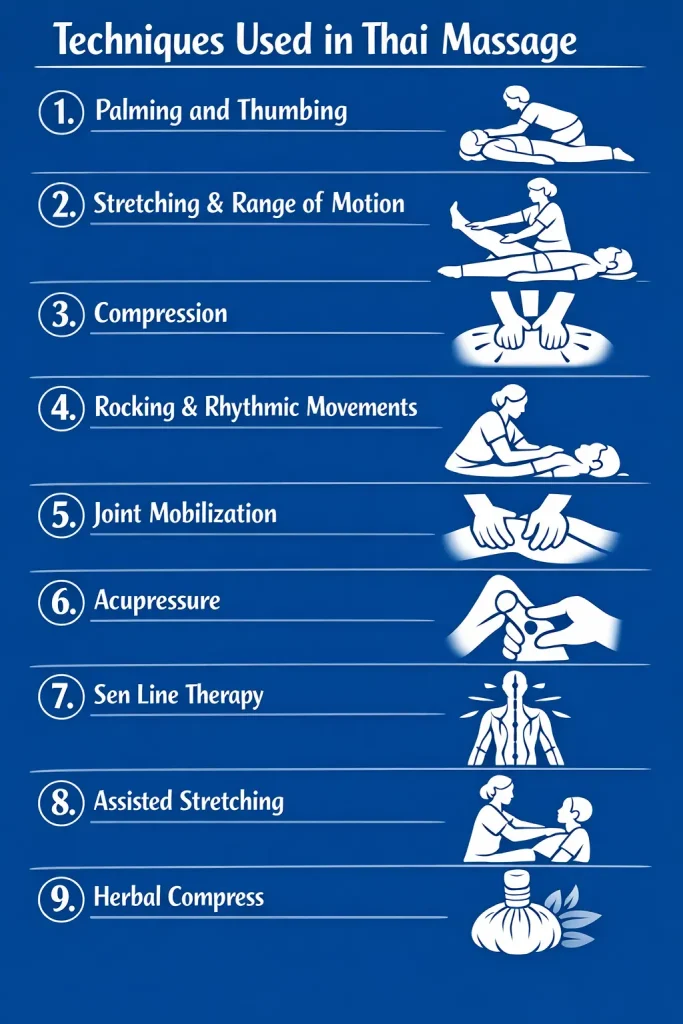
Palming and Thumbing
In this technique, the therapist uses their palms and thumbs to apply pressure to specific areas of the body. These areas often follow energy pathways known as sen lines. The pressure helps release muscle tension and stimulate circulation.
Stretching and Range of Motion
Thai massage is famous for its gentle, yoga-like stretches. The therapist carefully guides the body through stretches that target different muscle groups and joints. These movements improve flexibility and increase mobility.
Compression
Compression involves applying rhythmic pressure using the hands, elbows, knees, or thumbs. This technique helps relax tight muscles and encourages healthy blood circulation.
Rocking and Rhythmic Movements
Gentle rocking movements are often used to relax the body. These slow movements calm the nervous system and create a deep sense of relaxation.
Joint Mobilization
This technique focuses on gently moving and stretching the joints. It is particularly helpful for people who experience stiffness or limited range of motion.
Acupressure
Thai massage also uses acupressure techniques. The therapist applies pressure to specific points on the body that are believed to be connected to energy pathways. This technique helps restore balance and reduce tension.
Sen Line Therapy
Sen lines are energy channels believed to run throughout the body. Thai massage therapists work along these lines to support the smooth flow of energy and remove blockages that may cause discomfort.
Assisted Stretching
The therapist assists the client in performing deeper stretches that may be difficult to do alone. These stretches help improve flexibility and release tight muscles.
Herbal Compress
In some Thai massage sessions, heated herbal compresses are used. These bundles contain aromatic herbs that are pressed onto the body to relax muscles and improve circulation.
Read This also: Thai Massage vs. Swedish Massage
Benefits of Thai Massage
Thai massage offers many physical and mental health benefits. Regular sessions can improve body function and promote overall well-being.
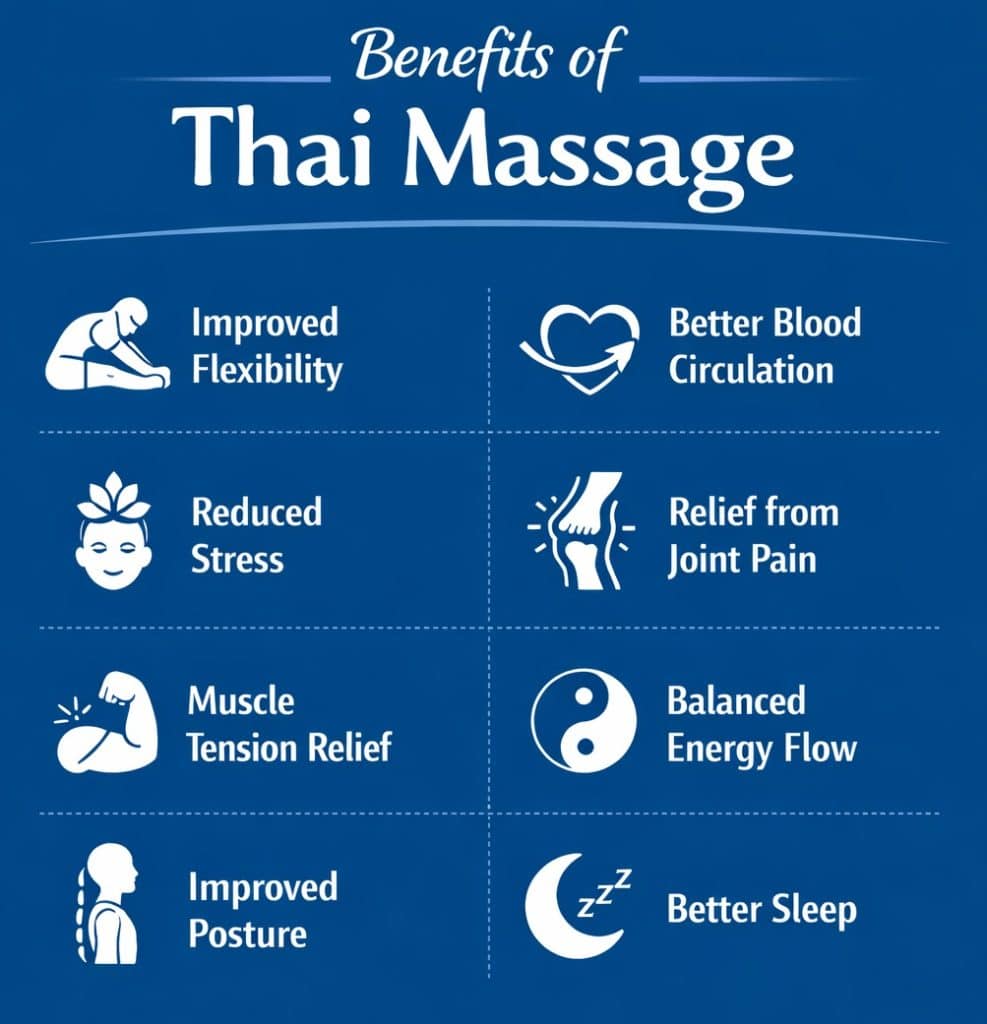
Improved Flexibility
Thai massage includes a series of stretches that help lengthen muscles and improve joint movement. Over time, this can increase flexibility and reduce stiffness.
Better Blood Circulation
The rhythmic pressure and stretching techniques help stimulate blood flow. Better circulation supports muscle recovery and improves overall body health.
Reduced Stress
Thai massage is deeply relaxing. The slow movements and stretching techniques help calm the mind and reduce stress.
Relief from Joint Pain
By improving joint mobility and relaxing surrounding muscles, Thai massage can help reduce discomfort caused by stiffness and tension.
Muscle Tension Relief
The combination of stretching and pressure helps release tight muscles and reduce chronic muscle tension.
Balanced Energy Flow
Traditional Thai healing focuses on balancing energy within the body. Working along sen lines helps restore harmony and support overall wellness.
Improved Posture
Thai massage can help correct posture by releasing tight muscles and improving body alignment.
Better Sleep
Many people experience improved sleep after Thai massage because the therapy helps relax both the body and mind.
Another study published in the Medical News Today found that Thai massage may help reduce stress levels and improve relaxation in people experiencing fatigue and muscle tension.
Conclusion
Thai massage is a unique therapy that combines stretching, pressure, and movement to support both physical and mental well-being. It helps improve flexibility, reduce muscle tension, and promote relaxation.
At Kaizen Health Group, experienced therapists provide professional Thai massage treatments designed to restore balance and comfort in the body. Whether you want to reduce stress, improve mobility, or simply relax, Thai massage can offer a deeply refreshing experience.
If you are searching for Thai massage in Mississauga, Kaizen Health Group offers a calm and professional environment where you can experience the benefits of this traditional therapy and improve your overall wellness.
Frequently Asked Questions
What should I wear during a Thai massage?
Thai massage is usually performed while you are fully clothed. Comfortable and loose clothing is recommended so the therapist can move your body easily during stretching and pressure techniques.
Is Thai massage painful?
Thai massage should not be painful. You may feel pressure or deep stretching during the session, but it should always remain comfortable. If any movement feels too strong, you can inform the therapist to adjust the pressure.
How long does a Thai massage session usually last?
Most Thai massage sessions last between 60 to 90 minutes. Some sessions may extend to two hours depending on the treatment plan and the client’s needs.
Who can benefit from Thai massage?
Thai massage is beneficial for people who experience muscle stiffness, stress, poor flexibility, or fatigue. It is also helpful for individuals who sit for long hours or want to improve overall body mobility.
How often should I get a Thai massage?
For general wellness and relaxation, a Thai massage once every two to four weeks is usually recommended. People dealing with muscle tension or stiffness may benefit from more frequent sessions as advised by their therapist.
