
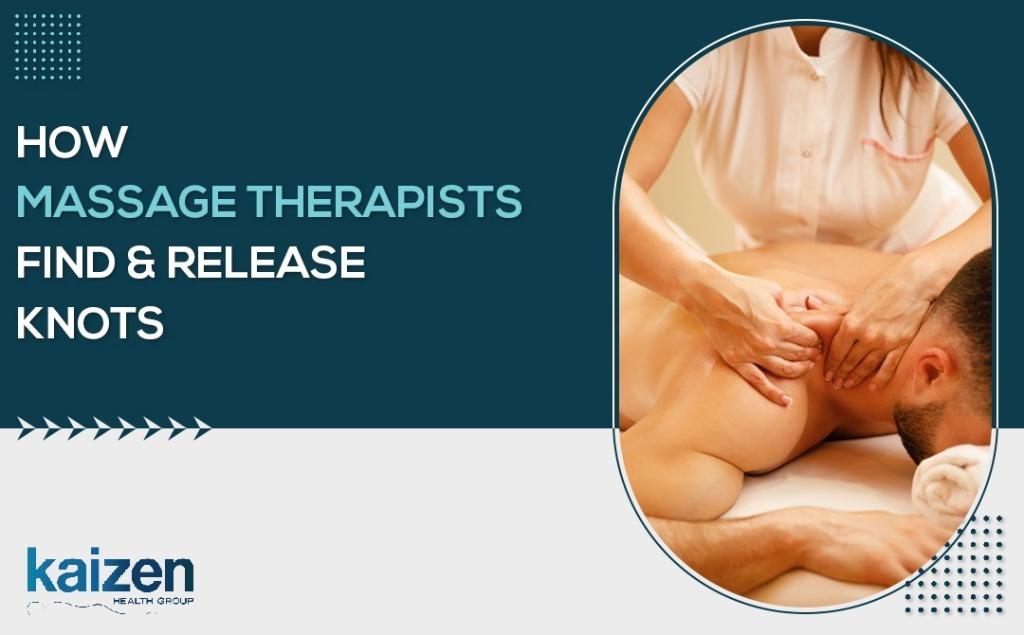
Many people experience tight and painful spots in their muscles that feel difficult to remove with simple stretching or self-massage. These tight areas are often called muscle knots. They can cause discomfort, stiffness, and even restrict normal movement.
Massage therapists are trained to locate these knots and release the tension using specific manual techniques. In this article, we will explain what muscle knots are, how massage therapists identify them, and how massage therapy helps relieve them.
What Are Muscle Knots?
Muscle knots, also known as trigger points, are small areas of tight muscle fibres that feel like hard lumps under the skin. These areas can become tender when touched and may cause pain in the surrounding muscles.
Muscle knots usually appear when a muscle remains tight for a long time. This may happen because of:
- Poor Posture
- Repeated Muscle use
- Stress and Tension
- Minor Muscle Injuries
When a muscle is overworked, the fibres can tighten and form small contracted areas. These tight spots reduce blood flow and make the muscle feel sore or stiff.
Several clinical studies have examined trigger points and muscle tension. Research published in the Physiopedia explains that trigger points are commonly linked to muscle overuse and prolonged tension in soft tissues.
How Do Massage Therapists Find Knots?
Massage therapists locate knots through a technique called palpation. This simply means feeling the muscles carefully with their hands.
During a session, the therapist slowly moves their fingers across the muscle tissue and applies gentle pressure. Knots often feel firmer or more sensitive than the surrounding muscle. They may also cause discomfort when pressed.
By carefully examining the muscle, therapists can identify areas where tension is present. This process helps them understand the condition of the muscle and determine the best treatment approach.
A study published in the NIH found that trained therapists can effectively identify trigger points through manual examination, allowing them to target treatment more precisely.
Once the knot is located, therapists use specific techniques to release the tension.
How Are Massage Therapists Trained to Release Knots?
Massage therapists receive professional training in anatomy, muscle function, and body mechanics. This training helps them understand how muscles move and how tension develops inside the body.
They learn several therapeutic techniques that are commonly used to treat muscle knots.
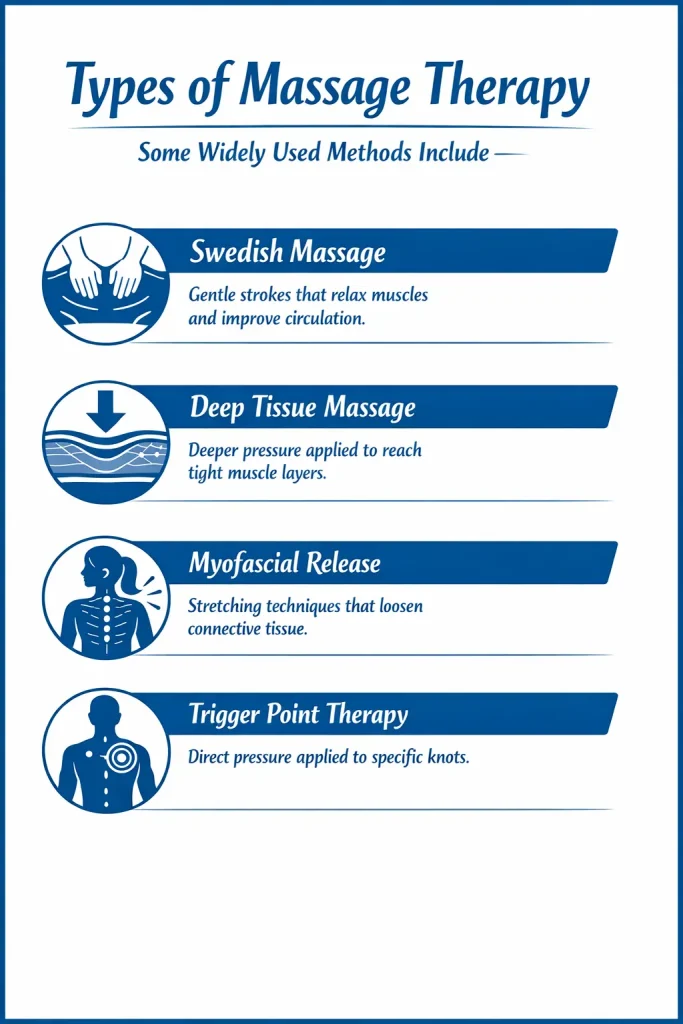
Massage therapists also learn how to adjust pressure, direction, and speed while working on muscle tissue. These small adjustments help them release tension safely and effectively.
Research published in the Cleveland Clinic suggests that trigger point therapy and manual massage techniques can significantly reduce muscle pain and improve muscle function when applied correctly.
Benefits of Massage Therapy for Knot Release
Massage therapy offers several benefits when it comes to relieving muscle knots. It helps relax tight muscles, improves circulation, and reduces inflammation.
Improved Blood Circulation
Massage therapy stimulates blood flow in the affected area. Better circulation delivers oxygen and nutrients to the muscles, which supports recovery.
Improved circulation also helps remove metabolic waste products from the muscle tissue. This can reduce stiffness and discomfort.
Reduced Muscle Tension
One of the most important benefits of massage therapy is its ability to relax tight muscles. Techniques such as deep tissue massage apply controlled pressure to areas where knots are present.
This pressure gradually helps loosen tight muscle fibres and reduce tension.
A study published in WebMD found that therapeutic massage can significantly reduce muscle tightness and improve overall muscle relaxation.
Increased Mobility
Muscle knots can restrict movement and make simple activities uncomfortable. Massage therapy helps loosen tight muscles and restore normal flexibility.
As the muscles relax, it becomes easier to move without stiffness or pain.
Pain Relief
Massage therapy also reduces inflammation and relaxes surrounding tissues. When muscle tension decreases, pressure on nearby nerves is reduced.
This often leads to noticeable pain relief and improved comfort during daily activities.
You can also read: 10 Quick Release Knots for Instant Pain Relief in Full Body?
Conclusion
Muscle knots are a common problem caused by stress, poor posture, or repeated muscle strain. Although they can be uncomfortable, professional massage therapy can help identify and release these tight areas effectively.
Massage therapists use trained hands and specialised techniques to reduce tension, improve circulation, and restore healthy muscle movement. Regular massage sessions can relieve existing knots and also prevent new ones from forming.
If muscle knots are causing ongoing discomfort, booking a session at Kaizen Health Group with a qualified massage therapist can help your body relax, recover, and move more freely.
Frequently Asked Questions
What does a muscle knot feel like?
A muscle knot usually feels like a small, tight lump inside the muscle. It may feel tender or sore when touched. Some people also experience stiffness, pressure, or a dull ache around the area where the knot is located.
How long does it take to release a muscle knot with massage therapy?
The time can vary depending on the severity of the knot and the condition of the muscles. Some knots improve in a single session, while others may require multiple sessions along with stretching and posture correction.
Are muscle knots dangerous?
Muscle knots are usually not dangerous, but they can cause discomfort and restrict movement if ignored. Over time, they may lead to chronic muscle tension or pain if the underlying cause is not treated.
Can massage therapy completely remove muscle knots?
Massage therapy can significantly reduce or release muscle knots by relaxing tight muscle fibres and improving blood flow. However, maintaining good posture, regular stretching, and proper muscle care is also important to prevent them from returning.
How can I prevent muscle knots from forming?
Muscle knots can often be prevented by maintaining proper posture, staying active, stretching regularly, and managing stress. Taking breaks during long periods of sitting or repetitive work can also help keep muscles relaxed and healthy.
